Kaal Sarp dosha is a disputed astrological classification, usually applied when the seven classical visible bodies lie on one side of the Rahu–Ketu axis. It is not an astronomical force trapping planets, and it does not establish that someone’s life is cursed. A useful explanation begins with the geometry before discussing any interpretation.
Which points and planets are involved?
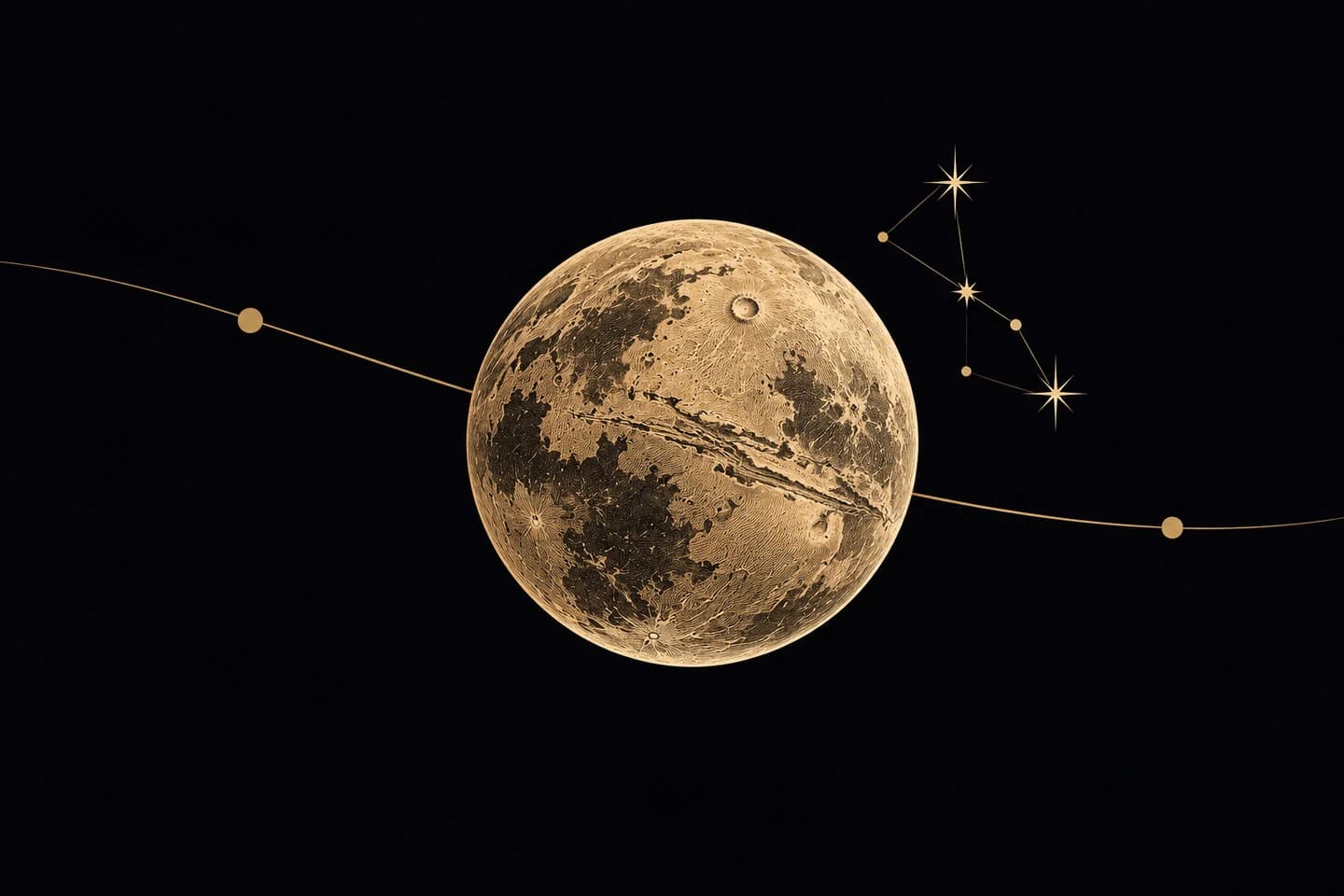
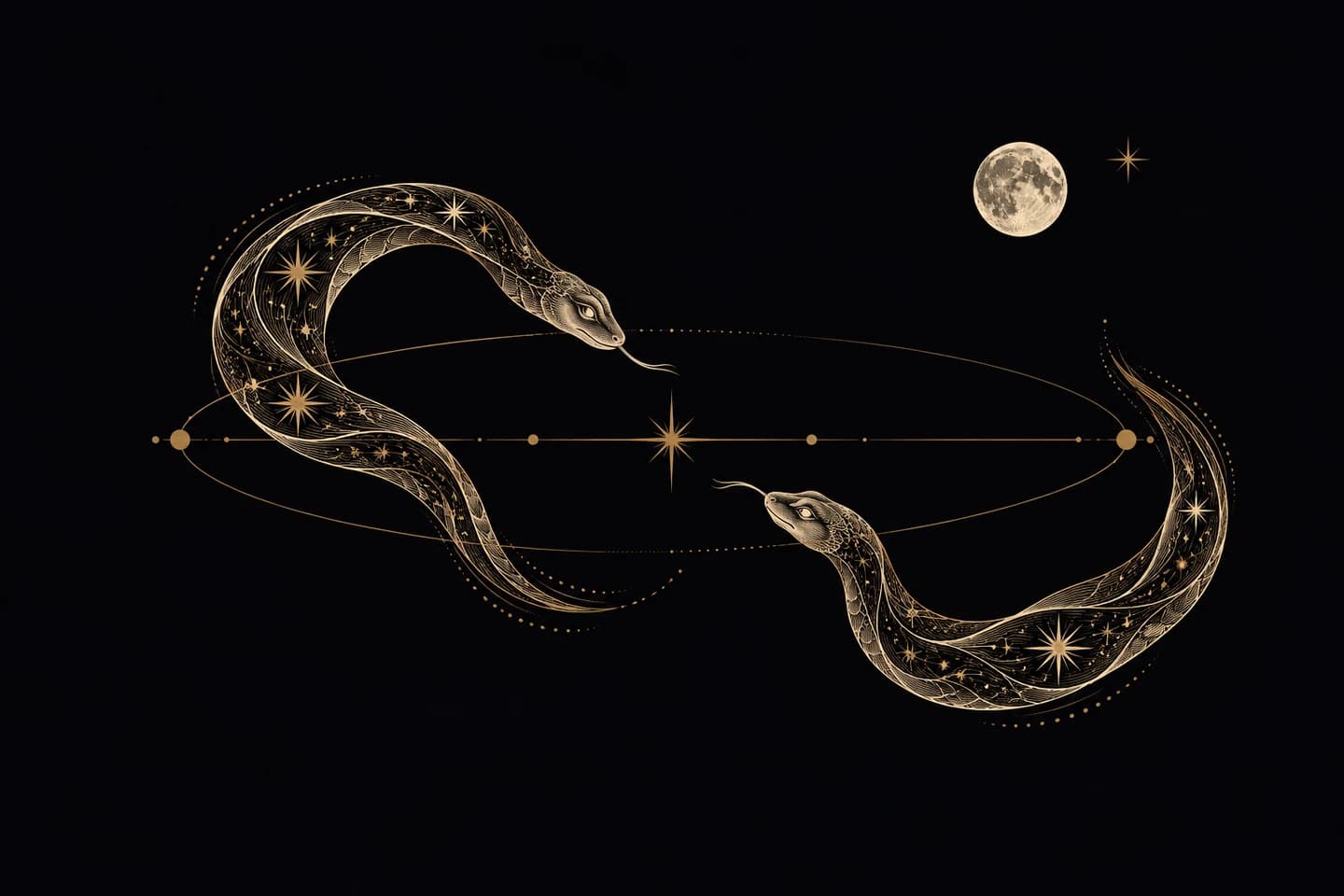
Rahu and Ketu are the Moon’s orbital nodes [the two crossings of the lunar orbit with the ecliptic], not physical planets. They are opposite each other, dividing a longitude circle into two halves. The usual enclosure check concerns the Sun, Moon, Mars, Mercury, Jupiter, Venus, and Saturn, not Uranus, Neptune, or Pluto.
Why reports disagree
The mean node smooths the lunar-node motion; a true-node calculation includes more of its variation. A planet close to a node can change category when the node model, tolerance, or endpoint rule changes. Some practitioners also distinguish Kaal Sarp from Kaal Amrita by orientation. These conventions should be disclosed rather than hidden behind a yes-or-no result.
Lists of twelve named types commonly organise the nodal axis by house placement. Names and detailed claims are not uniform across authors. The house axis can be described without assuming a specific named type predicts childlessness, divorce, sudden loss, or an age when every problem ends.
Separate the calculation from a frightening story
A concentration of planets in one half of a chart is a describable arrangement. Claims that it overrules every other placement or makes success impossible are additional beliefs, not consequences of the geometry. A report should identify its school and reasoning rather than asserting that all classical authorities agree.
What “twelve types” usually describes
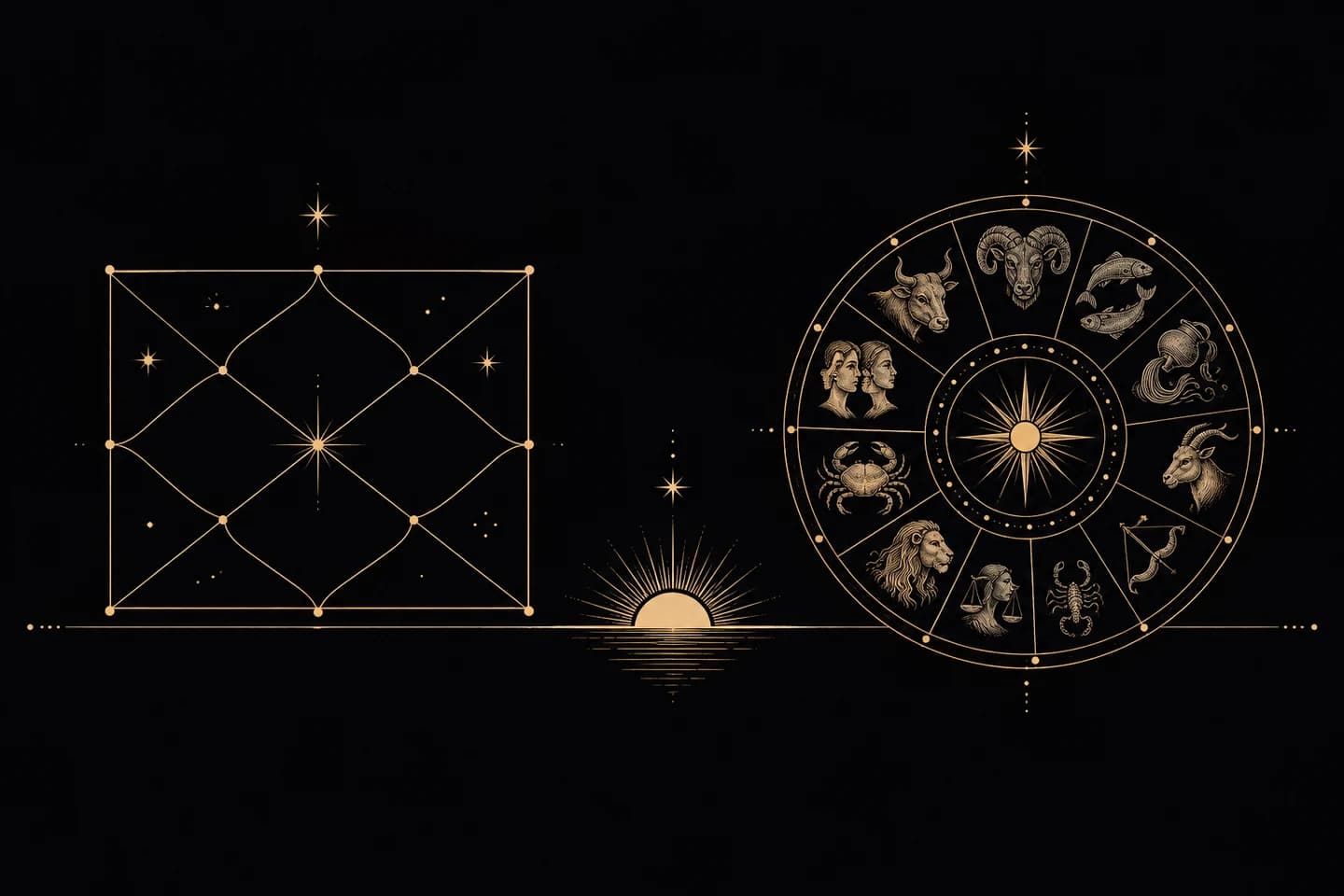
The usual twelvefold arrangement starts by asking which house contains Rahu; Ketu then lies opposite it. The first–seventh, second–eighth, third–ninth, fourth–tenth, fifth–eleventh, and sixth–twelfth axes are the six opposing pairs. Swapping which end contains Rahu produces the other six orientations. The naming scheme does not add twelve new astronomical phenomena.
A named type therefore needs two separate checks: whether the enclosure condition is met at all, and how the axis is placed in the chosen house system. Seeing Rahu in the first house is not enough to establish that all seven other bodies lie in one semicircle. An uncertain birth time can also make the house-based name uncertain even when the planet longitudes are similar.
Inspect a borderline result
Suppose a planet lies very close to the Rahu endpoint in a fictional chart. A strict rule might treat an exact conjunction differently from a planet just inside the arc. Another calculator may allow a small tolerance. Neither should hide that choice. Ask to see the planet and node degrees, the node model, and whether boundary planets are included.
An honest result can say “borderline under these settings” rather than forcing an absolute label. A tiny numerical difference should not be inflated into certainty about someone’s entire life. The practical value is understanding the rule and its uncertainty, not acquiring a more alarming name.
What about remedies?
Prayer, remembrance, or service can remain voluntary religious choices. There is no need to purchase an expensive ritual because someone claims that an unseen disaster will otherwise follow. Ask what is being promised, whether the claim can be checked, and whether you would choose the practice without fear. Practical problems still need practical responses.
Questions you may have
Does one planet outside the nodal semicircle change the result?
It changes a strict all-seven-planets enclosure test. Other practitioners may use different definitions, so ask for the precise rule.
Must I perform a paid ritual?
No. A chart classification does not create an obligation to buy a ritual, and payment cannot guarantee a life outcome.