Some retrograde calendars show a longer window around the backward phase. These extra dates are called the shadow period. They track the part of the zodiac that a planet passes over before, during and after its retrograde. Here is how to recognise the four boundaries and compare calendars that use different windows.
Define the cycle before extending it
Begin with the retrograde station, where the selected longitude measure changes from direct to backward motion. Then identify the direct station, where it changes back. The apparent-motion guide explains these turning points. They describe a calculated motion change. Adding a wider interpretive window is a separate choice and needs a separate label.
This guide uses the following shadow convention: the pre-shadow begins on the earlier direct passage through the longitude of the later direct station. The post-shadow ends on the subsequent direct passage through the longitude of the earlier retrograde station. The central retrograde interval remains bounded by the two stations. Exact crossings require the same declared coordinate and zodiac convention throughout the calculation.
Read four markers in order
- Pre-shadow entry: the planet is moving direct and crosses the position it will later reach at the direct station.
- Retrograde station: the selected motion measure turns backwards. This begins the actual retrograde interval.
- Direct station: the selected motion measure turns forwards. This ends that retrograde interval.
- Post-shadow exit: the planet, now direct, passes the position of the earlier retrograde station again.
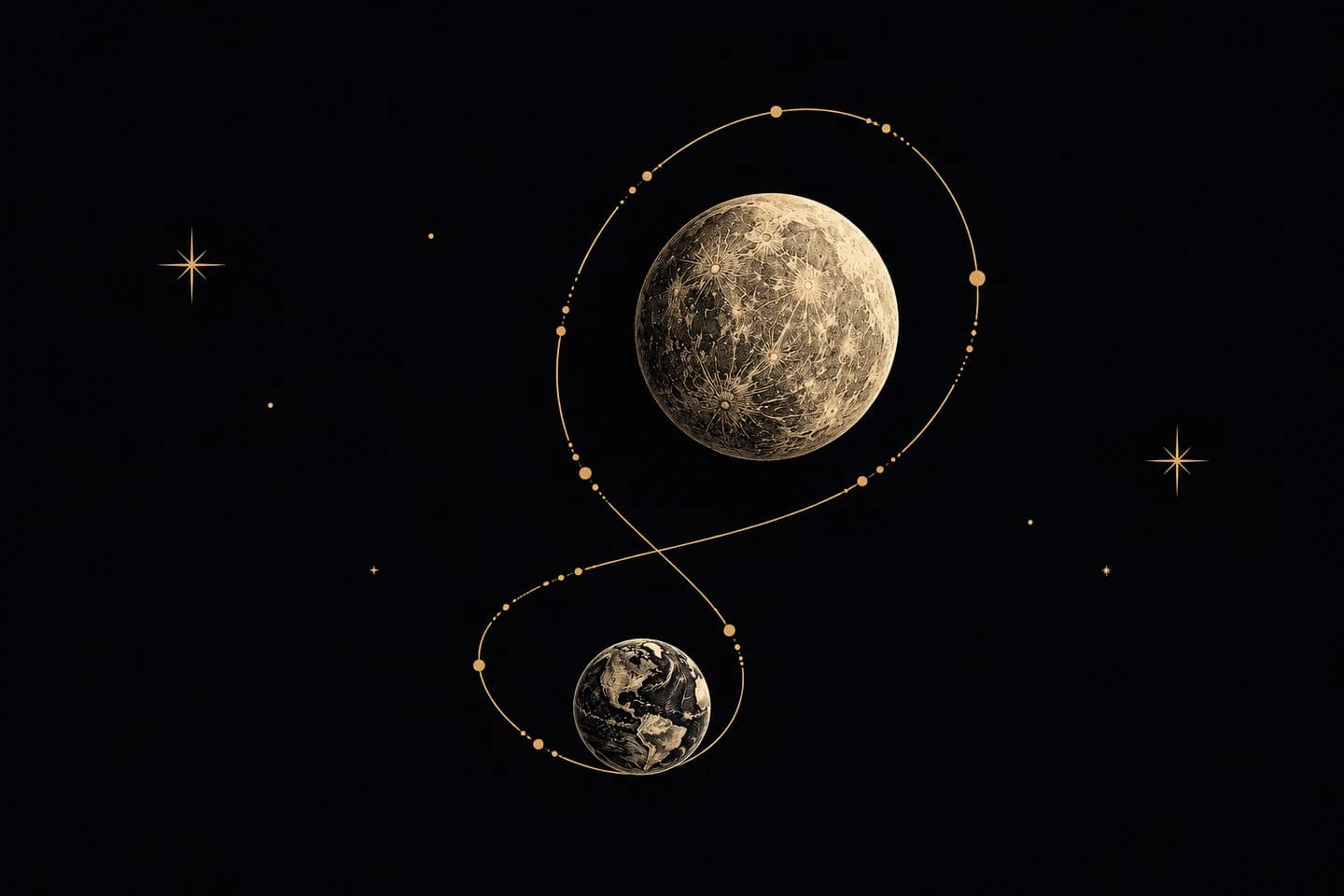
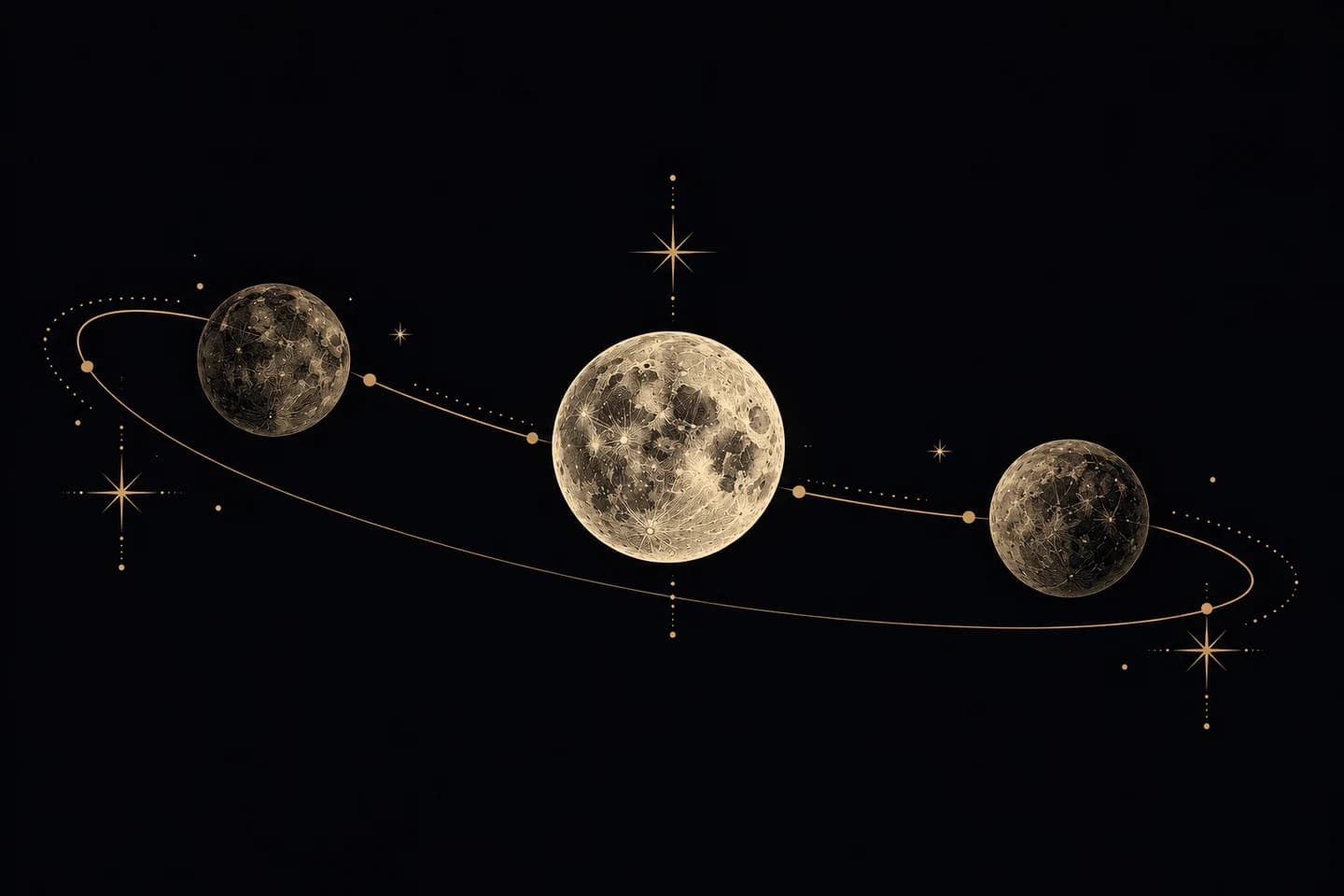
Imagine drawing a line between two station positions on a properly unwrapped longitude track. The shadow convention follows the earlier approach to that range and the later departure from it. This is a conceptual diagram, not a numerical forecast. It explains why the full shadow window is longer than the interval in which apparent motion is retrograde.
What a shadow boundary does not establish
Calling the first crossing an entry into a shadow does not identify an additional physical reversal, eclipse or sign ingress. Those event types have their own definitions. The boundary is selected because of its relationship to the station longitudes. An astronomical source explaining apparent motion supports that geometry; it does not establish that unresolved conversations begin at the first crossing or end at the last.
An astrologer may use the extended window to discuss preparation, repetition or review. Those are interpretive themes. If you use them, define a practical task independently, such as keeping a decision log, rather than searching afterwards for incidents that fit the label. A calendar highlight is not evidence that a delay was caused by the shadow or that another delay is unavoidable.
Compare calendars on their definitions
First check whether a calendar shows station dates or the full shadow window. Then compare its zodiac and timezone with the other calendar. The Anantrix retrograde calendar labels the retrograde cycles, while the period-and-transit guide explains how those shared dates can be considered alongside a personal chart.
Questions you may have
Is a planet retrograde during the whole shadow interval?
No. Under the definition in this guide, the pre-shadow and post-shadow are direct-motion intervals outside the two stations.
Must every calendar include shadow dates?
No. They are an optional interpretive convention. A calendar can correctly report the stations and retrograde interval without using shadows.