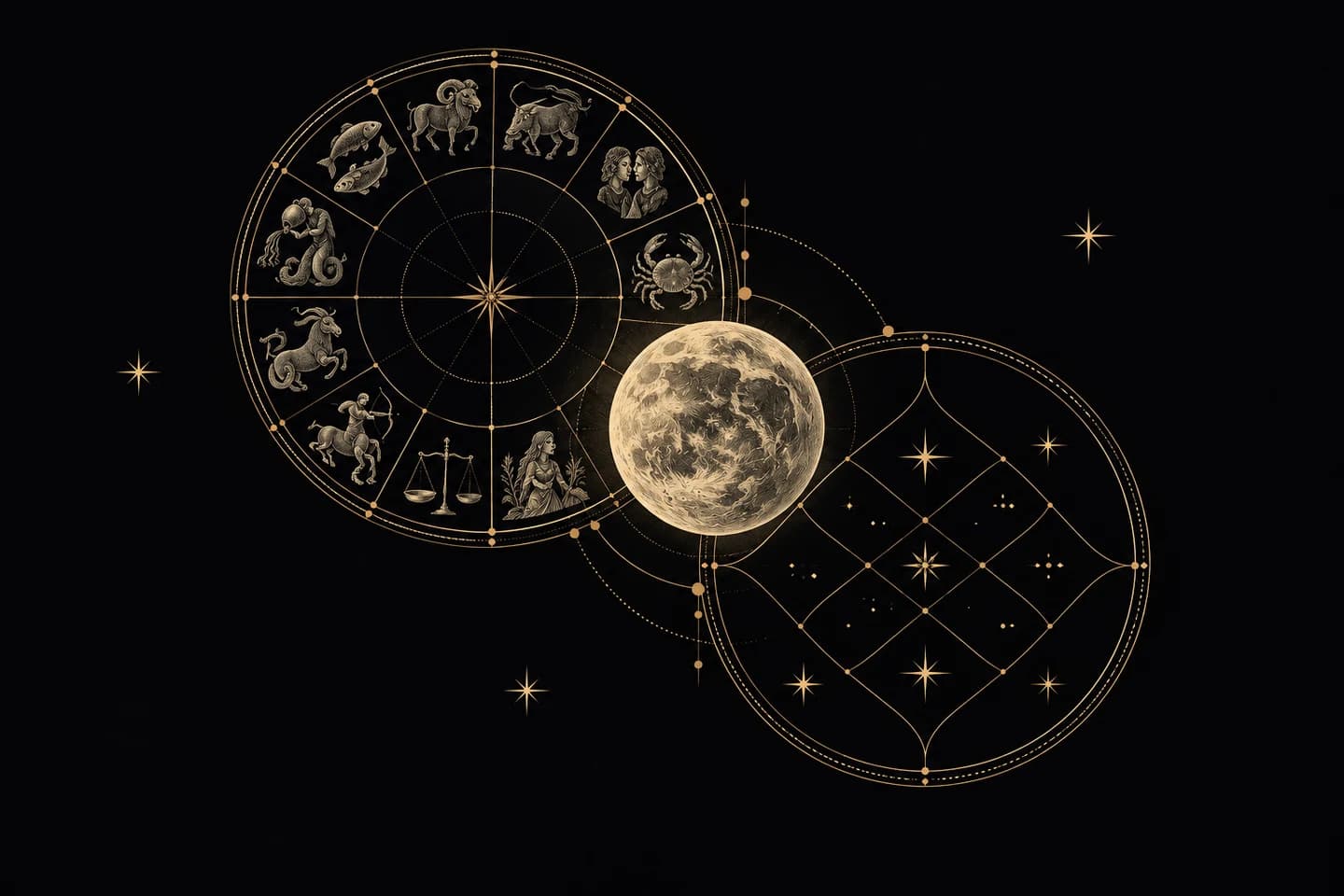
A Western calendar can place a planet in Gemini while a Vedic calendar places the same planet in Taurus. Both may be describing the same sky at the same moment. The difference often comes from the tropical and sidereal zodiacs, which use different starting points. Here is how to compare the labels without mixing the two systems.
One direction, two coordinate labels
The tropical zodiac starts its sign framework from the March equinox reference. A sidereal zodiac uses a specified offset convention, called an ayanamsha, to relate its framework to the tropical one. Lahiri is one named convention. The offset changes with epoch, so a modern value should not be applied as an exact constant to every historical or future date.
Both systems divide the zodiac into equal signs. A sign in a calculated zodiac is not the same thing as the full irregular astronomical constellation sharing its name. This distinction avoids the mistaken idea that two calendars are simply looking at two different planets. The main zodiac guide explains the broader background; this article focuses on reading a transit comparison.
A computed example with declared settings
The reproducible settings asset includes the fixture and method. Although this example uses a birth instant, the same coordinate distinction applies to positions used in a transit calendar. The example demonstrates a settings conversion, not an independently measured benchmark or evidence that either zodiac predicts personal outcomes more accurately.
Why sign-entry dates differ
An ingress occurs when a longitude crosses the boundary between signs in the selected zodiac. Since the sign boundaries differ, tropical and sidereal calendars can report different ingress dates for the same planet. Near a retrograde interval, a planet can cross a boundary again. A complete comparison must distinguish the initial entry from any return passage rather than expecting one universal date.
A station is a different event: it marks a reversal in the declared motion measure. If both calendars use the same geocentric station definition, show their different sign positions at that shared instant. Do not invent two physical stations simply because the printed signs differ. A timezone conversion can also change the displayed local date without changing the event.
Keep the interpretation in one declared frame
Choose the zodiac setting that matches the birth chart you are reading. The 2027 transit calendar labels Vedic and Western entries so you can follow the right sequence. For a personal timing question, add the relevant birth-chart reference and planetary period, as explained in the timing-layer guide.
Questions you may have
Does a different sign mean the planet is in two places?
No. Two zodiac reference systems can assign different longitudes and sign labels to the same astronomical direction.
Do all Western astrologers use tropical and all Vedic astrologers Lahiri?
No. Those are the two settings compared here. Read the declared method rather than inferring settings solely from a tradition label.